

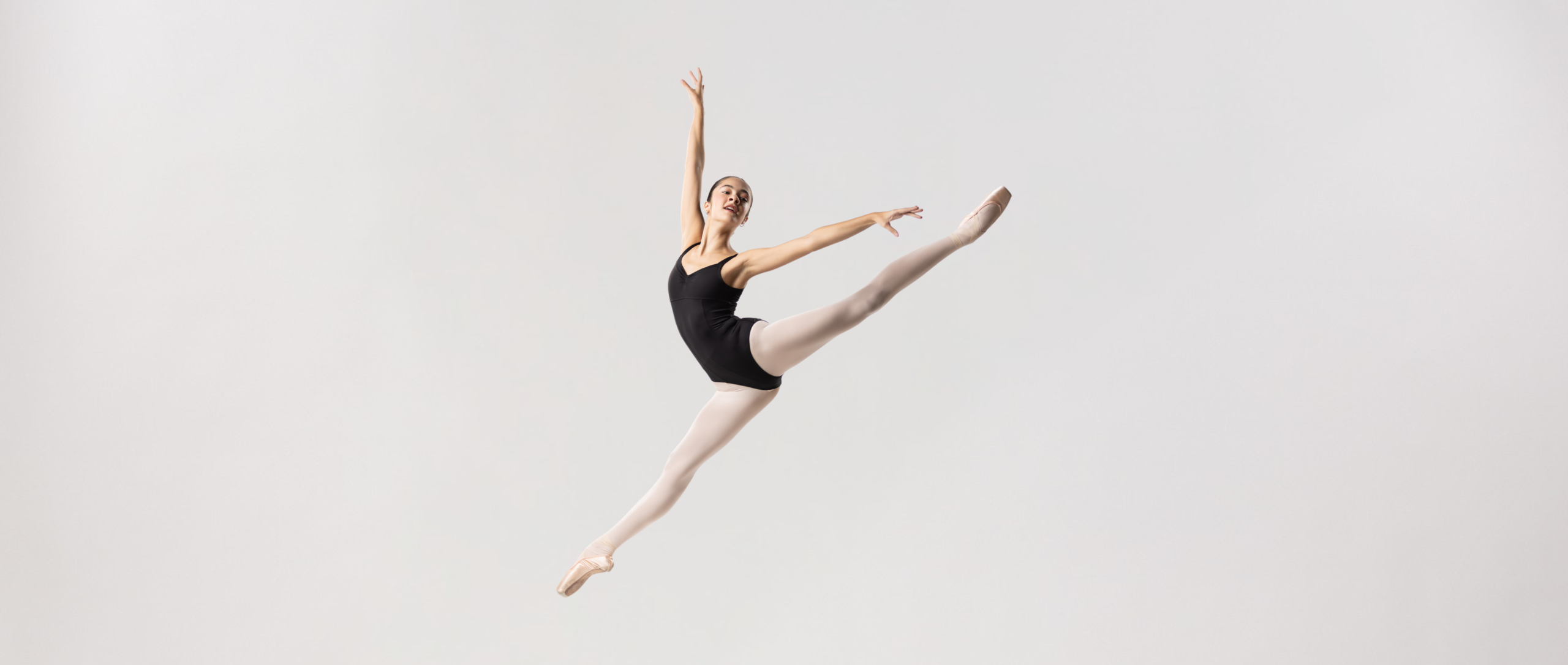
Summer intensives, trainee programs, second companies, professional contracts—and the million little things nobody really prepares you for.
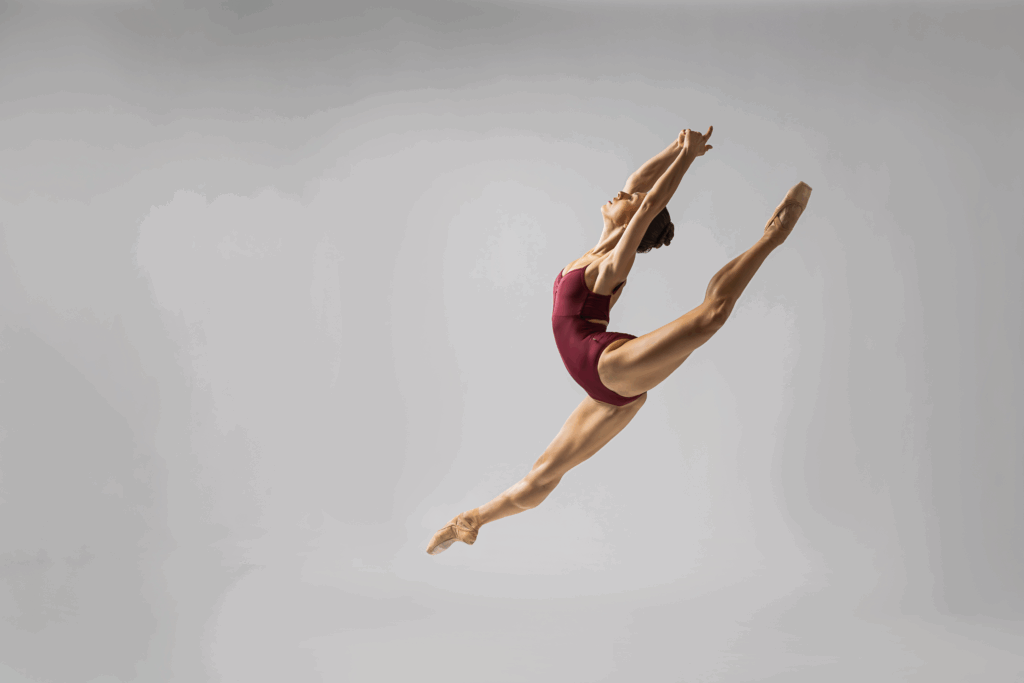
There’s a particular kind of chaos that comes with ballet audition season.
You’ve spent years training your body to do things most people can’t even wrap their heads around. You’ve logged thousands of hours at the barre, worked through injuries and setbacks, rehearsed until the corrections finally stuck, and probably spent an unreasonable amount of time thinking about the placement of your fifth position.
And now, on top of all that, you’re expected to become your own marketing department.
You need a dance résumé. A headshot. An arabesque photo. Maybe a tendu à la seconde. A classical variation. A contemporary variation. Class footage. Possibly partnering footage. Different application requirements for different programs, all with their own deadlines, submission formats, and fees.
Oh, and you’d better figure out which programs are actually a good fit for you, how much you’re willing to spend auditioning, and whether that trainee position you’re considering is worth another year of tuition.
Easy, right?
Having spent decades in the dance world—first as a dancer and now as a photographer and filmmaker working with professional dancers—I’ve seen the audition process from quite a few angles. I’ve been on the dancer’s side of the equation, and I’ve spent years behind the camera watching how professional dancers work, learn, adapt, and grow.
So let’s talk about some of the things that make audition season particularly challenging, and more importantly, what you can actually do about them.
1. You’re Not Just Auditioning Anymore. You’re Applying.
There was a time when a significant part of auditioning meant showing up, taking class, and letting your dancing speak for itself.
That still happens, of course. But for many programs and companies, there’s now an entire screening process before you ever set foot in the studio.
Your photographs, résumé, and video footage may be what determines whether you’re invited into the room in the first place.
And here’s where things get tricky: every organization seems to want something slightly different.
One wants a first arabesque and a headshot. Another wants those plus tendu à la seconde from two angles. Another wants a ten-minute video showing specific barre and center combinations. Some accept performance footage, while others specifically want classwork filmed in a studio.
If you apply to ten places without paying attention to those differences, you’re setting yourself up for a spectacular amount of unnecessary stress.
My advice: Treat your audition materials like a toolkit, not a one-size-fits-all application.
Create a master folder containing your best current materials: résumé, headshot, standard dance positions, classical footage, contemporary footage, and any additional work that demonstrates your abilities.
Then build each application from that collection based on what the organization actually requests.
And please, for the love of tendus, read the instructions.
If they ask for one side of an exercise, don’t send four. If they ask for a current studio recording, don’t substitute beautiful performance footage from three years ago. If they specify how to name your files, follow that format.
Details matter. Not because a director is necessarily going to reject you over a file name, but because submitting exactly what was requested makes it easier for someone to evaluate your work.
You want them focused on your dancing, not hunting for the link you forgot to include.
2. The Comparison Game Is Doing You Absolutely No Favors
You walk into an audition studio and immediately start scanning the room.
That dancer has incredible extensions. That one has beautiful feet. Someone across the room is warming up with a casual series of turns that makes you question every decision you’ve made since kindergarten.
And suddenly, instead of preparing to dance, you’re mentally compiling a list of all the reasons you don’t belong there.
Sound familiar?
Here’s something I wish more young dancers understood: An audition isn’t a competition to prove that you’re objectively the best dancer in the room.
It’s an opportunity for an organization to determine whether you’re a good fit for what it needs.
Of course technique matters. So do musicality, artistry, coordination, physical readiness, and versatility. But depending on the program, directors are also evaluating things like trainability, professionalism, potential, stylistic compatibility, and how you respond to instruction.
A dancer with spectacular extensions isn’t automatically a better candidate than someone with beautiful musicality and an extraordinary ability to absorb corrections.
And a dancer who’s perfect for one company may not be right for another.
What can you do?
Before audition season, sit down with a teacher you trust and have an actual conversation about your strengths and areas for growth.
Not a conversation about how you compare to everyone else. A conversation about what makes you compelling as a dancer.
Are you particularly musical? Quick at learning choreography? Strong in contemporary work? A natural performer? Do you have a beautiful quality of movement that doesn’t necessarily translate into circus-level tricks?
Know what you’re bringing into the room.
Then, once you’re there, pay attention to the teacher rather than conducting a running evaluation of everyone else’s anatomy.
Their extensions aren’t going to help you remember the combination.
3. Your Audition Photos Need to Show Your Dancing. Not Your Photoshop Skills.
Now we’re getting into my particular corner of the universe.
One of the biggest misunderstandings I see around dance audition photography is the idea that the goal is simply to create the most impressive-looking picture possible.
It’s not.
An audition photograph has a job to do.
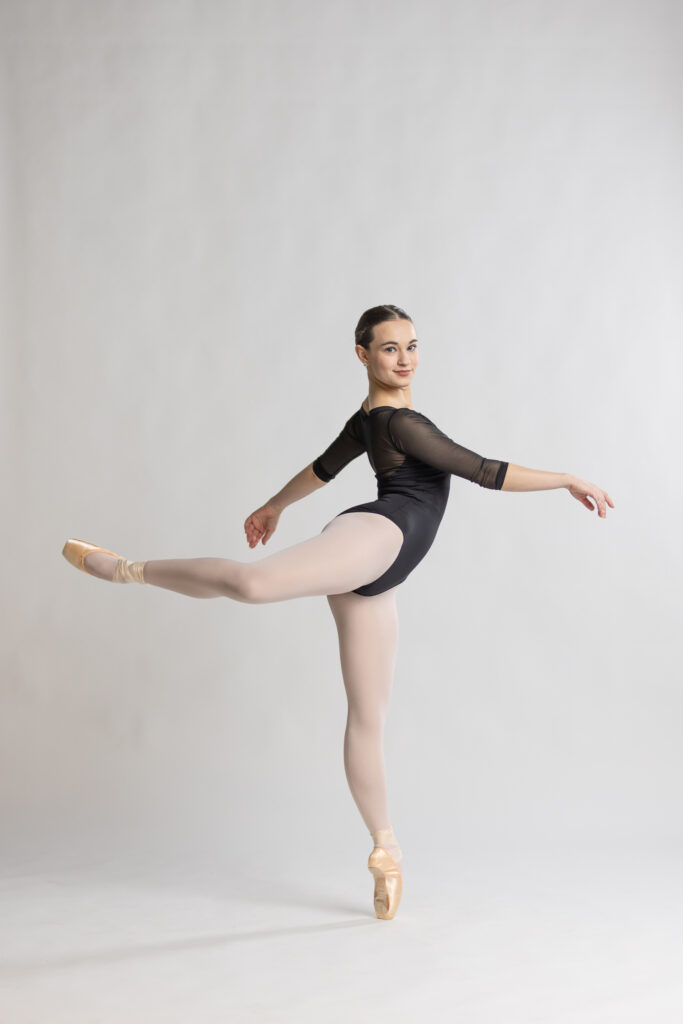
Depending on the position requested, it should allow someone reviewing your application to see your alignment, placement, proportions, extension, coordination, and overall understanding of classical technique.
That means the beautifully dramatic photograph where your leg looks impossibly high because the camera was practically sitting on the floor might not be doing you any favors.
Neither is an image where an elaborate costume obscures your alignment, or where editing has fundamentally altered your proportions.
I’m a huge fan of creative dance photography. Truly. I’ve spent years making it.
But your audition photos and your artistic portfolio are not necessarily the same thing.
For audition photography, clarity beats spectacle.
A few things I encourage dancers to consider:
- Choose positions you can execute cleanly. A technically sound arabesque at a slightly lower extension is more useful than a higher one held together by compensation.
- Pay attention to the camera angle. A photographer who understands dance can choose a perspective that accurately communicates your placement instead of accidentally distorting it.
- Wear clothing that allows your technique to be seen. Unless the application specifies otherwise, simple, fitted dancewear is generally your friend.
- Use current photographs. Your body, technique, and artistry change as you train. Your audition materials should represent the dancer you are now.
- Don’t overcomplicate the images. You aren’t auditioning for a fashion campaign. You want someone to see your dancing.
And perhaps most importantly, work with someone who understands what they’re photographing.
There’s a world of difference between a photographer who can make a dancer look beautiful and a photographer who knows whether the supporting leg is actually straight, whether the hips are properly placed, and whether the timing of the movement is communicating what it should.
Ideally, you want both.
A Little Help From Someone Who Speaks Ballet
This is exactly why I offer Dance Audition Photography Sessions.
My background in dance informs everything I do behind the camera. I don’t just tell dancers to extend a leg and hope for something pretty.
We work through the positions, make adjustments, look at the details, and create images that are both technically informed and beautifully photographed.
Because I’ve been on both sides of the camera, I understand the difference between a pose that looks impressive to someone who doesn’t dance and one that actually demonstrates strong classical technique.
And no, you don’t need to arrive knowing exactly how to pose for the camera. That’s part of my job.
The goal is to walk away with audition materials that feel like an accurate, confident representation of your work—not photographs that make you wonder whether you somehow forgot how to do an arabesque.
4. Video Auditions Are Their Own Special Kind of Challenge
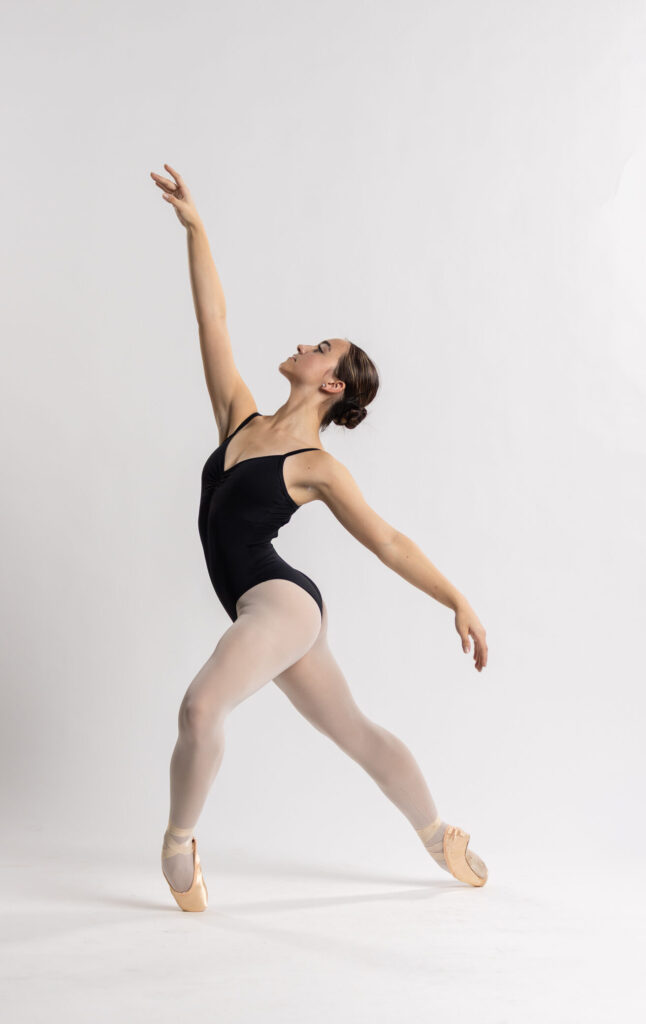
Let’s discuss the dreaded audition video.
In a live audition, someone can watch you move through space, see how you respond to corrections, and observe your energy throughout class.
On video, all of that has to translate through a screen.
And suddenly you’re thinking about lighting, camera placement, framing, music, editing, and whether your feet disappear out of frame every time you travel.
Here’s the thing: A good audition video is not necessarily a highly produced audition video.
In fact, depending on the requirements, overly elaborate production may be completely unnecessary.
Your primary goal is to make your dancing easy to evaluate.
That means a stable camera, appropriate framing, clear lighting, and a space where you can safely demonstrate the requested movement.
If the application asks for full-body footage, the camera needs to capture your entire body throughout the exercise. Not just when you’re standing still at the beginning.
If you’re showing traveling combinations, make sure the framing accommodates the movement.
And while it can be tempting to create a cinematic masterpiece with dramatic transitions and atmospheric close-ups, remember what the footage is actually for.
An artistic director needs to see how you dance.
My advice: Think like the person watching your submission.
Can they see your feet? Your alignment? Your use of space? Your coordination? Can they follow the exercise without unnecessary cuts?
Have a teacher review the footage before submitting it. Better yet, review it together while you still have time to make adjustments.
A technically straightforward recording that clearly represents your dancing is infinitely more useful than a beautifully produced video that doesn’t show what the program asked to see.
And check the actual link before you submit it.
Preferably from a browser where you’re not already logged into your own account.
Nothing like discovering your carefully prepared audition exists behind a private video setting that nobody else can access.
5. The Financial Side of Auditioning Deserves More Attention
Auditioning can get expensive. Fast.
Registration fees might seem relatively manageable individually, but start applying to multiple programs and those numbers add up.
Then there’s travel, transportation, hotels, additional training, photography, and potentially the cost of producing video materials.
If you’re auditioning for summer intensives, you also have to consider tuition, housing, meals, and transportation once you’re accepted.
And if you’re looking at trainee programs, the financial questions become even more important.
Some programs charge tuition. Some provide scholarships. Some offer compensation. Some provide meaningful performance opportunities and close access to a professional company, while others may offer a very different experience.
Acceptance alone should not be the deciding factor.
Before committing, find out what you’re actually getting.
How much time will you spend training versus rehearsing? Will you perform? Will you work with company artistic staff? Are there meaningful opportunities for advancement? What have previous dancers gone on to do?
And what is the full cost of participating?
There’s nothing wrong with investing in additional training when it makes sense for your development. But it’s worth understanding what that investment is buying you.
For dancers applying to multiple places, this is another reason to plan your audition materials strategically.
A strong set of appropriately photographed dance positions and a well-organized library of current footage can serve multiple applications.
You may need to customize the submission for each organization, but you shouldn’t have to start the entire process from scratch every time.
Spend your resources where they’ll make a meaningful difference.
6. Rejection Is Information. Not a Final Verdict.
This one is important.
You can have a genuinely excellent audition and still not receive an offer.
I know that sounds frustrating. Because it is.
You can also have an audition where you make mistakes, feel completely out of your element, and somehow still be invited to the next round.
Audition results aren’t always a neat reflection of how well you performed that day.
Programs and companies have different needs. They have limited spaces, particular repertoire, existing dancers, artistic priorities, and countless other considerations that you may know absolutely nothing about.
It can feel deeply personal when someone says no, especially when you’ve devoted so much of your life to your craft.
But a rejection is not a comprehensive evaluation of your worth or potential as a dancer.
Sometimes it indicates an area where you need more training. Sometimes you’re not the right fit for that organization at that moment. Sometimes there are simply more qualified applicants than available positions.
And sometimes you never get a particularly satisfying explanation.
If you receive feedback, use it.
If you don’t, talk with your teachers about what you can learn from the experience. Consider whether the programs you’re targeting align with your current strengths, training, and goals.
And if you don’t get the offer you wanted, allow yourself to be disappointed.
You don’t have to immediately turn every disappointment into a motivational speech about how everything happens for a reason.
Sometimes it just sucks.
Then you regroup, get back into class, and decide what comes next.
One audition does not get to write the rest of your career.
7. Your Next Step Doesn’t Have to Look Like Everyone Else’s
One of the more difficult things about transitioning from student to professional dancer is that there’s no single, predictable path.
Some dancers move directly into company positions. Others spend time in trainee programs or second companies. Some take additional training, freelance, explore contemporary work, or discover that the career they thought they wanted at sixteen looks very different by twenty-two.
And none of those paths is inherently a failure.
It’s easy to get caught up in the prestige of a particular program or the fear of falling behind your peers.
But your next opportunity should make sense for your development.
If you’re considering a summer intensive, ask what the training will offer that you aren’t currently receiving.
If you’re considering a trainee program, look carefully at the opportunities to perform, work with professional dancers, and develop the skills that will help you move forward.
If you’re pursuing a second company or professional contract, spend some time researching the organization’s repertoire, size, artistic direction, and expectations.
Is this somewhere you can see yourself growing? Is the movement vocabulary something you’re excited about? Are you prepared for the financial and personal realities of relocating?
Remember, you’re evaluating them, too.
Your goal isn’t simply to collect acceptances.
It’s to find the next environment where you can do meaningful work and continue developing as an artist.
8. Give Yourself the Gift of Being Prepared
I know. Groundbreaking advice.
But hear me out.
There’s a difference between being prepared as a dancer and being prepared for audition season.
The first is what you’ve spent years doing in the studio.
The second involves a whole collection of administrative and logistical tasks that can become wildly overwhelming if you leave everything until the last minute.
Before audition season gets into full swing, take some time to get organized.
Research the programs you’re interested in. Keep a running list of application requirements, deadlines, fees, and audition dates.
Get your résumé updated. Make sure your photos are current. Review your available video footage and identify what still needs to be recorded.
Ask your teachers for input. If you’re pursuing professional opportunities, have conversations with people who understand that particular transition.
And give yourself enough breathing room that an unexpected application requirement doesn’t turn into a full-scale emergency.
You can’t control every audition result.
But you can control how prepared you are when an opportunity comes along.
And there’s something genuinely empowering about knowing that your materials are organized, your research is done, and you’re ready to focus on the part you actually trained for.
Dancing.
One Last Thing
I spend a lot of time photographing dancers, from students beginning to navigate pre-professional training to artists working at the highest levels of the profession.
And one of the things I love most about this work is watching dancers discover just how much they’re capable of.
Sometimes that happens in the studio, when a correction suddenly clicks.
Sometimes it happens during a photoshoot, when we find exactly the right placement, timing, and camera angle and a dancer sees an image that reflects the years of work they’ve put into their technique.
There’s often this wonderful moment when they look at the back of my camera and realize, Oh. That’s me.
And I love that moment.
Because while I can’t make the audition decisions for an artistic director, I can help make sure the images you’re sending into the world represent the dancer you’ve worked so hard to become.
If you’re preparing for summer intensive, trainee, second company, or professional auditions and need updated photographs, my Dance Audition Photography Sessions are designed specifically for that purpose.
We’ll focus on creating technically informed, polished images that serve your actual audition needs, with the benefit of having someone behind the camera who knows dance well enough to help you get there.
You bring the years of training. I’ll bring the cameras, the dance knowledge, and an entirely reasonable obsession with the details.
And wherever this audition season takes you, remember that you’re building something much bigger than a single acceptance letter.
You’re building a career in an art form that demands an extraordinary amount of dedication.
Give yourself some credit for how far you’ve already come.
And then go dance.
Ready to update your audition photos? Explore my dance photography sessions at Jennifer Zmuda Photography.